
Day 1: Create Your Fertility Corner
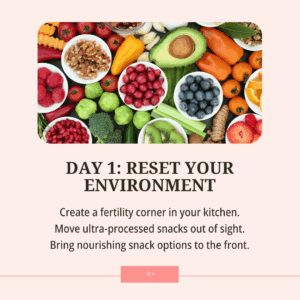
Day 1 is about a small environmental change that makes healthy choices feel easier, especially on the days when motivation is low.
When you’re stressed, tired, or rushing, you’ll naturally reach for whatever is closest and most convenient. That’s not a discipline problem. That’s how the brain is wired.
This is why the environment matters so much for fertility habits.
If your kitchen is set up for quick, ultra-processed snacks, those will win every time, no matter how strong your intentions are. So instead of relying on willpower, we reset your surroundings today.
Your Day 1 Action
- Set aside 5 to 10 minutes today and focus on your “easy-grab” food zones, such as benchtops, open shelves, or the front of the pantry.
- Move ultra-processed snacks out of immediate sight. You don’t need to throw anything away. Simply place them in a cupboard or drawer you don’t open often. Out of sight truly does become out of mind.
- Next, create a small fertility corner in your kitchen. Choose one visible space and bring supportive options to the front.
Helpful choices include:
- Raw nuts or seeds, such as walnuts, pumpkin seeds, almonds, chia seeds, or ground flaxseed
- Fresh fruit, especially berries, apples, or citrus fruit
- Natural nut butters with no added sugar
- Wholegrain or seeded crispbreads or rice cakes
- Rolled oats or chia pudding jars for quick breakfasts
- Caffeine-free teas like spearmint, chamomile, or rooibos
This simple shift helps your brain default to nourishment on autopilot, particularly on busy or emotional days when decision-making feels harder.
Why This Matters for Fertility
Consistent, nutrient-dense choices support blood sugar balance and reduce inflammation, both of which are important for hormone regulation and egg health. And when healthy options are visible and convenient, you’re far more likely to choose them without effort.
This isn’t about being perfect. It’s about creating a foundation that makes better choices easier for the rest of the week.
One small change. One supportive step forward.
Day 2: Set the Hormonal Tone for the Day
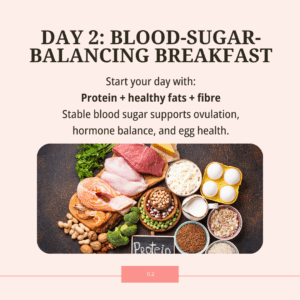
Day 2 focuses on breakfast, because what you eat in the morning has a powerful influence on your hormones, energy levels, and appetite for the rest of the day.
When breakfast is skipped, delayed, or consists mainly of refined carbohydrates or just coffee, blood sugar tends to spike and crash.
These fluctuations can disrupt ovulation, worsen cycle irregularity, and place additional stress on hormone balance, particularly if you have Polycystic Ovarian Syndrome (PCOS) or insulin resistance.
I often see women wondering why their cycles feel unpredictable, and when we look closely, breakfast is heavily carbohydrate-based with very little protein or fat. Your fertility hormones need stability to function well.
The Fertility Breakfast Formula
A fertility-supportive breakfast includes three key components:
Protein + healthy fats + fibre-rich antioxidants
This combination helps slow digestion, stabilise blood sugar, and provide the building blocks your hormones and developing eggs rely on.
Simple, realistic options include:
- Full-fat Greek yogurt with mixed berries, ground flaxseed, and pumpkin seeds
- Two pasture-raised eggs with sautéed greens and half an avocado
- A smoothie with protein powder, frozen berries, almond butter, and spinach
- Overnight chia pudding topped with nuts and fruit
Your Day 2 Action
Choose one of the above fertility-friendly breakfasts that you genuinely enjoy.
Why This Matters for Fertility
Stable blood sugar supports consistent ovulation, healthier hormone signalling, and improved egg health over time. This single habit often leads to fewer cravings, better energy, and more stable moods throughout the day.
One balanced breakfast may seem small, but repeated daily, it creates a strong hormonal foundation for fertility.
Day 3: Hydration Reset and Caffeine Audit
Day 3 shifts your focus to what you’re drinking, because hydration and caffeine intake quietly influence fertility in ways many women don’t realise.
Even mild dehydration can affect the quality of cervical mucus, the fertile fluid that helps sperm travel to the egg. Dehydration can also increase headaches and fatigue, which raise cortisol levels and place extra strain on your hormones.
Caffeine matters too. Intakes above about 200 mg per day, roughly two small coffees, may reduce fertility in some women and can significantly disrupt sleep quality. Poor sleep then feeds back into hormone imbalance, insulin resistance, and irregular cycles.
Rather than removing everything at once, today is about making one supportive adjustment.
Your Day 3 Actions
- Set a realistic hydration target: Aim for 1.5 to 2 litres of fluids across the day, unless advised otherwise by your doctor. A simple strategy is to fill a 1-litre bottle twice and aim to finish both by bedtime.
- Do a gentle caffeine audit: Look at what you drank yesterday. If you’re having three or four coffees, reduce your intake by just one cup today. Replace it with an option that still feels comforting, such as:
- Fruit-infused tea
- Decaffeinated coffee
Why This Matters for Fertility
Adequate hydration supports cervical mucus production, circulation, and energy levels. Gradually reducing excess caffeine can improve sleep quality, lower cortisol, and support more balanced hormone signalling.
These small shifts may feel subtle, but over time they create a more fertile internal environment, without adding stress or restriction. By lowering your caffeine load, you also help to minimise the risk of early pregnancy loss.
One thoughtful change. One more step toward a steadier hormonal foundation.
Day 4: 20 Minutes of Movement for Blood Flow

Day 4 is about movement, but not in the way most people expect.
When fertility is the goal, more exercise is not always better. Intense or excessive training, especially alongside stress or under-eating, can raise cortisol and interfere with ovulation and cycle regularity.
What your body needs right now is gentle, consistent movement that improves blood flow to the reproductive organs, supports insulin sensitivity, and helps your nervous system feel safe.
This is particularly important if you have PCOS, irregular cycles, or feel constantly “wired but tired.”
Your Day 4 Action
Set aside 20 minutes today for gentle to moderate movement. That’s it. Choose something that feels supportive, not punishing.
Good options include:
- A brisk walk outside (bonus points for fresh air and sunlight, which supports vitamin D)
- Fertility-focused or restorative yoga
- Pilates
- Light strength training using bodyweight or small weights
If you already exercise regularly, today’s reset is about adding balance, not intensity. Consider swapping one hard session this week for something slower, like yoga or a phone-free walk.
Why This Matters for Fertility
Moderate movement improves circulation, supports blood sugar control, and helps regulate stress hormones, all of which play a role in ovulation and egg health.
When movement feels grounding rather than exhausting, it becomes something your body responds positively to, not something it needs to recover from.
Today isn’t about pushing harder. It’s about supporting your body gently, one step at a time.
Day 5: Evening Wind-Down for Hormones and Sleep
Day 5 focuses on sleep, one of the most overlooked yet powerful influences on fertility.
When sleep is consistently poor or shortened, cortisol rises, insulin sensitivity worsens, and appetite hormones become dysregulated. Over time, this can interfere with ovulation and egg quality. Research consistently shows that women who sleep fewer than seven hours per night have lower pregnancy rates.
Tonight, instead of aiming for a perfect bedtime routine, the goal is to create a short, repeatable wind-down ritual that signals safety and rest to your nervous system.
Your Day 5 Action
Set aside 30 to 45 minutes before bed to slow your body down. Start with one or two of the following:
- Set a screens-off time, ideally 30 to 60 minutes before sleep. Even 30 minutes can make a difference. Blue light suppresses melatonin, a hormone essential for quality sleep and egg health.
- Choose one calming activity, such as gentle stretching, reading a physical book, or journaling. A simple “brain dump” of worries and tomorrow’s to-do list can prevent your mind from racing at night.
- Support your nervous system with nutrition or herbal support. A magnesium-rich dinner that includes leafy greens or legumes, or a calming herbal tea like chamomile or passionflower, can help promote relaxation.
Aim for 7 to 9 hours of sleep, knowing that consistency matters far more than perfection.
Why This Matters for Fertility
Sleep is when your body repairs, restores, and regulates hormones. Repeating a gentle wind-down routine night after night can lower cortisol, improve insulin sensitivity, and support healthier ovulatory cycles over the next 90 days of egg development.
You don’t need to fix sleep overnight. You simply need to create the conditions that allow your body to rest.
