
The Fertility Dietitian’s Role in Supporting Embryo Implantation Failure
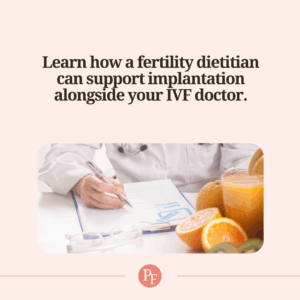
Your fertility specialist focuses on embryo grading, genetics, uterine imaging, and medication protocols. My role as a fertility dietitian is different.
I review your inflammatory status, immune balance, microbiome, and nutrient reserves. All of which directly influence whether an embryo can successfully implant.
This is not general healthy eating advice. It is a targeted, evidence‑based review designed specifically for women experiencing failed embryo transfer or recurrent implantation failure in IVF.
I use what I call a three‑step nutrition audit, conducted alongside your IVF doctor.
Step 1: Inflammation and Immune Balance
Why inflammation matters in embryo implantation failure
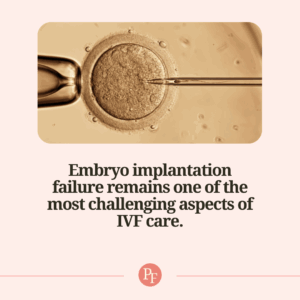
Low‑grade, chronic inflammation can interfere with implantation by triggering an immune response that makes the uterine environment less receptive to an embryo.
When reviewing nutrition after a failed embryo transfer, I am not counting kale servings or asking you to cut all joy out of your life.
I am looking for inflammatory drivers.
This includes assessing:
• Omega‑3 intake and fatty acid balance
• Antioxidant status and oxidative stress load
• Blood sugar stability and metabolic health
• Immune triggers such as thyroid autoantibodies
Research consistently shows that adherence to an anti‑inflammatory Mediterranean‑style dietary pattern is associated with significantly higher IVF success rates, including improved implantation and live birth outcomes.
Nutrition is also used strategically to calm immune over‑activation, helping create a quieter uterine environment where implantation is more likely to occur.
Step 2: The Reproductive Tract Microbiome
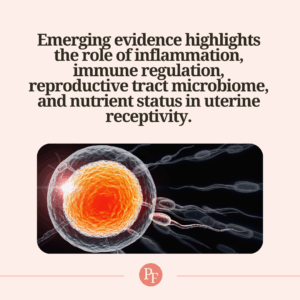
For many years, the uterus was thought to be sterile. We now know this is not true.
The uterine environment has its own microbiome, and successful implantation is strongly associated with a microbiome dominated by Lactobacillus species.
Landmark research has shown:
• Implantation rates above 60% when Lactobacillus dominance exceeds 90%
• Implantation rates are closer to 20–25% when this balance is disrupted
After embryo implantation failure, I often recommend further investigation to answer two key questions:
- Is protective Lactobacillus present in sufficient levels?
- Are pathogenic bacteria creating silent inflammation?
When dysbiosis is identified, targeted nutrition strategies, probiotics, and medical treatment, coordinated with your IVF specialist, can be implemented before another embryo is transferred.
Addressing the microbiome first can prevent unnecessary loss of precious embryos.
Step 3: Supplements and Nutrient Status
Why are more supplements not the answer
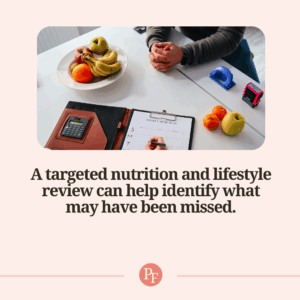
After a failed embryo transfer, many individuals feel compelled to add more supplements. In practice, this often does more harm than good.
My first step is always a safety and interaction review.
This includes checking:
• Interactions with any medications
• Overlapping nutrients across multiple products
• Excessive dosing that may impair implantation
Next, we assess nutrients directly linked to implantation success, including:
• Vitamin D — receptors are present in the uterine lining and placenta, and deficiency is associated with lower implantation rates
• Iron and zinc — essential for cell division and early placental development
• Fatty acid balance — influences uterine blood flow and inflammatory signalling
This process is guided by testing. The goal is not “normal” ranges, but fertility‑optimal levels, achieved well before your next embryo transfer.
Why This Approach Matters After Embryo Implantation Failure
This process is not about adding more to your workload.
You are already doing enough.
It is about doing what is right for your body, removing uncertainty, and ensuring that when you enter your next embryo transfer, you know every modifiable factor has been addressed.
For women experiencing embryo implantation failure, this structured review often provides clarity after years of uncertainty.
Click here to learn more about how to increase embryo implantation success.
