Learn how blood sugar and IVF outcomes are linked and 3 science-backed nutrition strategies to improve IVF success.

How Blood Sugar and Insulin Can Affect IVF Outcomes

If you’ve been told your blood sugar is “normal,” but you’re still facing failed embryo transfers, poor fertilisation, or disappointing IVF outcomes, there may be a missing piece no one has explained clearly enough: silent insulin resistance.
 
Many women assume insulin resistance only matters if they have polycystic ovarian syndrome (PCOS), diabetes, or weight concerns. But newer research shows that even women with normal fasting glucose, normal weight, and regular cycles can still have underlying insulin patterns that affect egg quality, embryo development, and implantation.
 
A growing body of evidence now shows that blood sugar and IVF outcomes are closely connected, even when routine blood tests appear reassuring.
 
As a fertility dietitian, this is one of the most overlooked areas I see in women preparing for IVF. They are doing everything right, taking supplements, eating better, attending appointments, yet their metabolic environment is quietly working against them.
 
The good news is that this is one area you can influence.

What Is Silent Insulin Resistance?

How Blood Sugar and Insulin Can Affect IVF Outcomes - What Is Silent Insulin Resistance?

To understand why blood sugar and IVF matter, it helps first to understand insulin.
 
Glucose is your body’s main fuel source. After you eat, glucose enters the bloodstream, and insulin acts like a key that helps move that glucose into your cells for energy.
 
In insulin resistance, the cells stop responding efficiently to insulin. Your pancreas compensates by producing more insulin to keep blood sugar appearing normal.
 
That means:
  • Your fasting glucose may still look fine
  • Your HbA1c may appear normal
  • But your insulin can already be elevated
This is why many women are told everything looks “fine” when, metabolically, their bodies are already under strain.
 
Excess insulin creates what I often describe as metabolic noise. That noise interferes with reproductive hormones, ovarian function, and uterine receptivity.

Why Blood Sugar Matters for IVF Success
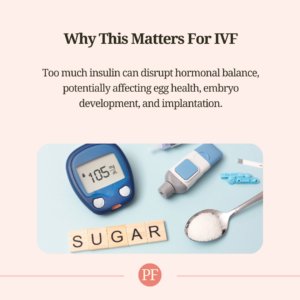
How Blood Sugar and Insulin Can Affect IVF Outcomes - Why This Matters For IVF

A narrative review found that insulin resistance affects fertility through multiple pathways, including ovarian function, inflammation, oxidative stress, and endometrial receptivity.
 

1. Insulin Can Affect Implantation

Your uterine lining needs to become receptive at exactly the right time for implantation to occur.
 
When insulin remains elevated:
  • Inflammatory signalling increases
  • Endometrial receptivity markers may be reduced
  • Embryo attachment becomes more difficult
Even when an embryo is genetically normal, the lining may not be fully prepared. Think of it like preparing soil before planting. If the soil is inflamed or unstable, implantation becomes harder.

2. Insulin Can Increase Oxidative Stress in the Ovary

High insulin levels also contribute to oxidative stress inside the ovary. This matters because your eggs rely heavily on mitochondria, the tiny energy-producing structures inside the cell.
 
When oxidative stress rises:
  • Mitochondrial efficiency drops
  • Egg energy production weakens
  • Embryo division can be affected
This is why metabolic health influences more than ovulation alone. It reaches all the way into egg competence.

Blood Sugar Can Affect IVF Even If You Are Not Overweight
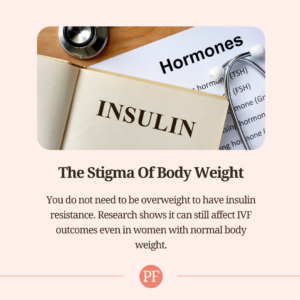
How Blood Sugar and Insulin Can Affect IVF Outcomes - The Stigma Of Body Weight

This is one of the most important findings from newer fertility research.
 
A large study involving more than 1,700 IVF patients found that insulin resistance remained an independent risk factor for poorer IVF outcomes even in women with normal body weight.
 
That means you do not need to have obvious weight concerns for this to matter. High insulin levels actually ‘confuse’ your brain, causing it to suppress basal follicle-stimulating hormone (FSH)—the very hormone you need to grow healthy follicles.
 
Researchers also found poorer 2PN fertilisation rates, suggesting that insulin resistance affects cytoplasmic maturation inside the egg.
 
The 2PN fertilisation rate is the percentage of mature eggs that are successfully fertilised, indicating normal fertilisation.
 
In simple terms, the egg may appear mature from the outside, but the internal machinery necessary for fertilisation and embryo development may not be functioning optimally.

3 Science-Backed Ways To Stabilise Blood Sugar

The encouraging part is that your metabolic environment can improve.

1. Change the Order You Eat Your Food

One of the simplest and most powerful strategies is to change the meal order. Research shows that eating fibre and protein before carbohydrates can significantly reduce post-meal glucose spikes.

A simple structure:
  • Eat vegetables first
  • Then protein and healthy fats
  • Leave starches or carbohydrates until last
 

2. Consider Myo-Inositol Supplement (If Clinically Appropriate)

If you have PCOS, irregular cycles, or signs of insulin resistance, a myo-inositol supplement may be worth discussing with your fertility dietitian and doctor. Myo-inositol helps improve how cells respond to insulin.

A recent systematic review comparing myo-inositol with metformin found:
  • Similar benefits for fasting insulin
  • Similar support for metabolic regulation
  • Better gastrointestinal (GI) tolerance
  • Balancing the reproductive hormones
 

3. Test Beyond Fasting Glucose

This is where many women miss the real issue. A fasting glucose alone often misses silent insulin resistance. Two women can have identical glucose numbers, but one may be producing far more insulin to maintain it.

Useful tests to discuss with your doctor include:
  • Fasting insulin
  • Fasting glucose
  • Postprandial insulin and glucose levels (2 hours after a meal)
  • HbA1c (average blood sugar control over the past three months)
Once you understand the metabolic picture, nutrition becomes targeted rather than a matter of guesswork.

Bottom Line

  1. Normal fasting glucose does not rule out insulin resistance.
  2. Blood sugar instability can affect both egg health and embryo implantation.
  3. Small nutrition shifts and the right testing can help improve metabolic health and support IVF success.

Ready for a clear, personalised fertility nutrition plan before your next step? Book a session with me now.

Disclaimer:
The information in this blog is for educational purposes only and is not a substitute for professional medical advice. It is not intended to diagnose, treat or prevent any health condition. Always consult a qualified healthcare provider before changing your diet, medications, supplements, or treatment plan. Pristine Fertility is not liable for any actions taken based on this information.

Scroll to Top