
What Is NAD+ And Why Do Fertility Researchers Care?
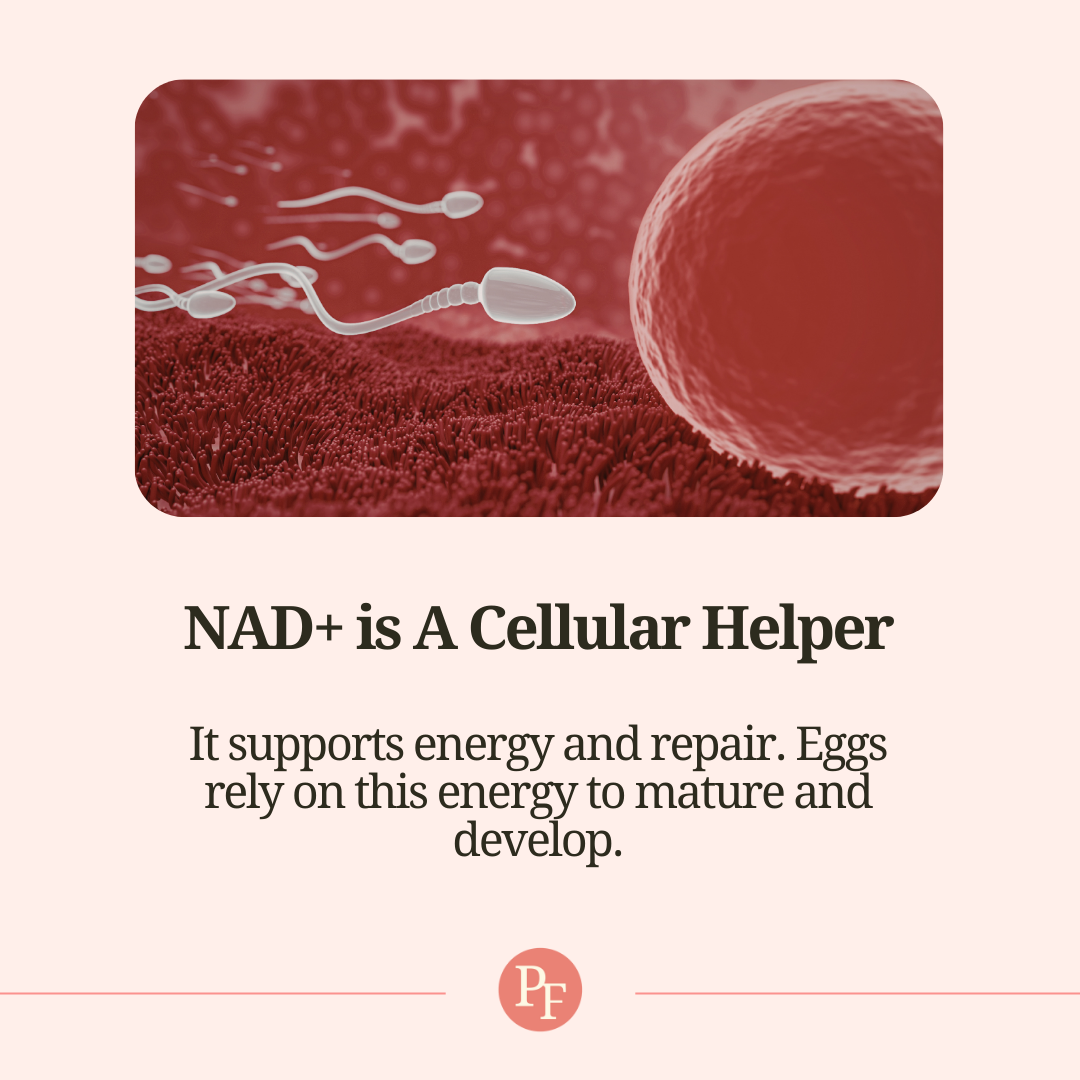
Imagine your egg is a tiny house. Inside that house are little “power stations” that make energy. Your egg requires significant energy to mature properly, be fertilised, and develop into an embryo.
NAD+ helps those “power stations” work. It also supports “fix-it” jobs inside the cell, including repair and stress-response systems.
As we age, NAD+ levels can decline, and when NAD+ is lower, cells may have greater difficulty producing energy and coping with stress.
A 2025 review in Biology of Reproduction highlights that NAD+ metabolism is closely linked with ovarian function, cellular energy systems, and stress pathways, and that changes in NAD+ biology are seen with ovarian ageing and in certain reproductive conditions.
NAD+ is not a magic word. It’s a real molecule your body uses every day.
NAD+ Boosters: What Are NMN And NR?
When people say “NAD+ supplements,” they often mean NAD+ precursors. These are nutrients your body can use to make more NAD+.
Two common ones you’ll see in Australia are:
They’re both related to vitamin B3 pathways, and they’re popular because they’re being studied as potential ways to support NAD+ levels.
What Does The Research Show For Egg Quality?
This is where things get interesting, and also where we need to stay grounded.
1. Animal research (promising, but not “proof”)
In mice, researchers have tested NAD+ precursors and observed signals that NAD+ biology is involved in egg ageing.
The 2025 Biology of Reproduction review summarises findings across multiple animal studies where NAD+ precursors have been associated with outcomes like:
- Improved egg maturity
- Improved fertilisation-related measures
- Improved energy function inside the egg
- Reduced cellular stress signals
But the same review also clearly emphasises uncertainties and the need for human trials before NAD+ strategies are treated like established fertility therapies.
What Should Be Considered Before Taking An NAD+ Supplement?
If you’re considering NAD+ precursors (NMN or NR) while trying to conceive or preparing for IVF, these are the safety checkpoints I want you to think about:
1. Your IVF timeline matters: Supplements are not all the same. We want to avoid introducing new variables right before retrieval or transfer without a personalised nutrition assessment.
2. Check interactions with medications: This is especially important if you’re on thyroid medication, metformin, anticoagulants, immunology medications, or a complex IVF protocol.
3. Avoid stacking NAD+ supplements: Taking more NAD+ support isn’t always ideal, and overdoing antioxidant-style support can contribute to reductive stress, which may interfere with healthy cellular signalling.
4. Pregnancy caution: Fertility supplement decisions should always be conservative around conception and early pregnancy unless your medical team has cleared it.
