
1. NMN: The Mitochondrial “Reboot”
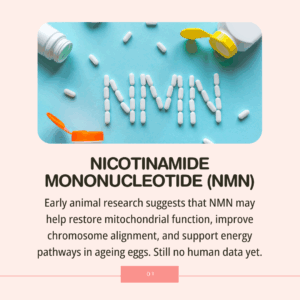
Why scientists are studying it
Nicotinamide Mononucleotide (NMN) is a precursor to NAD⁺, an essential molecule your cells use for:
- Mitochondrial energy production
- DNA repair
- protecting cells from age-related damage
When doctors say “your eggs are too old,” they’re often referring to mitochondrial decline, because mitochondria power every step from egg maturation to embryo development.
What the animal studies show
In aged mice, NMN supplementation has been shown to:
- Restore mitochondrial function in oocytes
- Reduce oxidative stress inside the eggs
- Improve meiotic spindle alignment (keeps chromosomes in the right place)
- Increase fertilisation rates
A 2025 study also found:
- Better embryo development
- improved chromosomal stability
In simple terms, older eggs functioned more like younger eggs in controlled animal models after the NMN supplementation.
What this means for you
NMN is promising, but still early. Human egg-quality trials are underway but not yet conclusive.
If mitochondrial health is a concern, focus on proven foundations:
- CoQ10 (ubiquinol)
- sleep
- blood sugar balance
- anti-inflammatory eating
- reducing toxin exposure
In my 1:1 work, I also use NAD⁺ testing, which can help personalise mitochondrial support and NMN supplements in a safe, evidence-aligned way.
If you’d like clarity on your supplement plan, check out our Express Supplement Review to tailor it to your fertility needs.
2. PQQ: The Supplement Being Studied for Making New Mitochondria
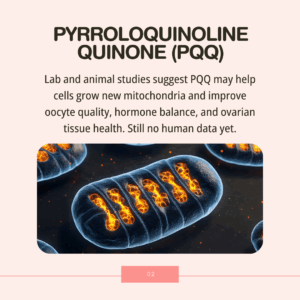
Why PQQ is gaining attention
Pyrroloquinoline Quinone (PQQ) may help the body make new mitochondria, a process known as mitochondrial biogenesis.
For eggs, which require an enormous amount of energy to mature, fertilise, and divide, this is potentially significant.
What the research shows
In aged mouse ovaries, PQQ supplementation has been shown to:
- Restore ovarian function
- Improve oocyte quality
- Reduce ovarian fibrosis (less scarring)
- Support hormone balance
- Enhance mitochondrial and lysosomal function
This isn’t simple “antioxidant hype.” These are measurable, structural improvements in egg and ovarian function.
Who does this matter for
Women who have struggled with:
- Embryos that stop developing early
- low blastocyst formation
- Repeated comments about “poor egg quality”
But remember: PQQ is not yet validated in humans for egg quality, IVF success, or natural conception.
If this intrigues you, speak with a fertility practitioner who understands how to integrate mitochondrial support safely.
3. DIM: Supporting Estrogen Metabolism & Inflammation Pathways
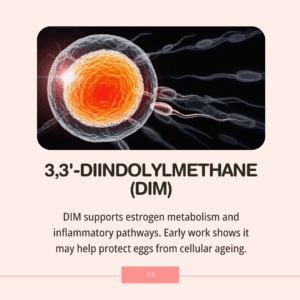
Where DIM fits in
While NMN and PQQ focus on energy pathways, DIM (3,3′-Diindolylmethane) supports:
- estrogen metabolism
- inflammatory pathways
- oxidative stress regulation
DIM is a natural compound formed when you digest cruciferous vegetables like broccoli, kale, cabbage, and Brussels sprouts.
What the lab and animal studies suggest
DIM has been shown to:
- Protect oocytes from mitochondrial and chromosomal ageing
- Preserve the ovarian reserve
- Regulate cell-death signalling (apoptosis)
- Reduce inflammatory damage
Some early work suggests DIM complements mitochondrial support by improving the hormonal and inflammatory environment surrounding developing eggs.
Who does this matter for
Women 35+ who experience:
- endometriosis
- fibroids
- heavy or irregular cycles
- Symptoms suggestive of estrogen dominance
- inflammatory fertility conditions
However, DIM requires careful monitoring. It can significantly shift estrogen pathways and often interacts with:
- IVF medications
- thyroid medication
- hormonal contraception
- HRT
Food-first is always the safest place to begin. Aim for 1–2 cups of cruciferous vegetables most days, which provides gentle, safe DIM precursors without the risks of supplementation.
Cruciferous vegetables include:
- Broccoli
- Cauliflower
- Brussels sprouts
- Cabbage (red and green)
- Kale
Ready to take the next step?

Download our Free 7-Day Fertility Meal Plan here. A practical Mediterranean-style guide to nourish your egg health, balance hormones, and prepare your body for pregnancy success.
