
1. Irregular Cycles
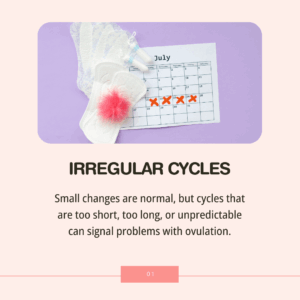
A slight variation is normal. Some cycles can be 28 days one month and 30 the next. But cycles shorter than 21 days, longer than 35, or swinging unpredictably are considered irregular.
Irregular periods usually mean ovulation isn’t happening regularly, which directly affects fertility since no egg is being released consistently.
2. Skipping Periods
Missing a cycle occasionally due to stress, illness, or travel is normal. But if you’re going months without a period, it’s a major fertility red flag.
Conditions like Polycystic Ovarian Syndrome (PCOS) or thyroid disorders often cause skipped periods. Without ovulation, conception simply can’t occur.
3. Very Heavy or Very Light Periods
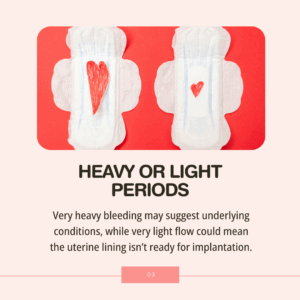
If you’re soaking through a pad or tampon every hour, bleeding more than seven days, or passing large clots, your period is considered heavy. This may indicate fibroids, endometriosis, or hormonal imbalances. All of which affect fertility.
On the flip side, if your flow is extremely light or just spotting, it may mean your uterine lining isn’t thick enough to support implantation, another key period and fertility connection.
4. Bleeding Between Periods
Occasional spotting may be harmless. But frequent bleeding between cycles could signal hormonal shifts or uterine issues like polyps. This irregular bleeding can interfere with embryo implantation, reducing fertility success.
5. Severe Pain During Periods
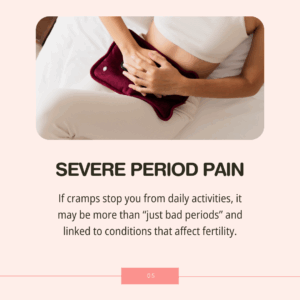
Some cramping is normal. But if your period pain keeps you in bed, makes you miss work, or requires strong medication, it could signal endometriosis, adenomyosis, or chronic inflammation. These conditions directly impact fertility and should not be overlooked.
6. Short Luteal Phase or Early Spotting
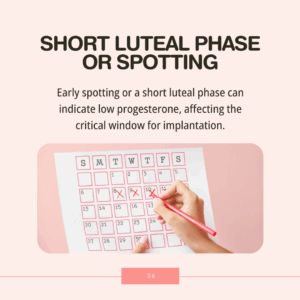
The luteal phase is the time after ovulation until your next period. If it’s shorter than 10 days, or if you spot several days before your period, it may suggest low progesterone or a luteal phase defect.
Because implantation happens during this window, problems here are directly linked to your period and fertility outcomes.
If you’re interested in learning more about how to support progesterone naturally, click here to visit our previous blog post.
