
Step 1: What to Test Before IVF
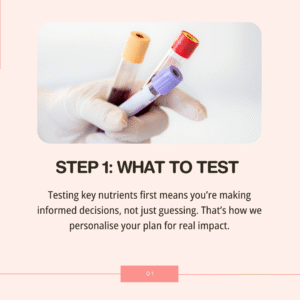
Before adding supplements or following a meal plan, it’s essential to understand your nutrient status. Without this, you’re just guessing.
These are the key blood tests I typically recommend for my private clients. It’s not the same for everyone.
Vitamin D:
- A meta-analysis found women with vitamin D levels above 75 nmol/L had significantly higher IVF success, with 74% greater odds of live birth compared to those with low levels.
Ferritin (Iron Stores):
- Ferritin plays a crucial role in ovulation, egg development, and the formation of a healthy uterine lining. One study in 292 women with low ferritin levels found that iron infusions, which raised levels to ~80 µg/L, doubled the live birth rate and halved the risk of miscarriage.
Thyroid Panel (TSH, FT4, TPO Antibodies):
- Suboptimal thyroid levels can reduce IVF success and increase miscarriage risk.
Homocysteine:
- Elevated homocysteine is linked with unexplained infertility and miscarriage. This marker also helps personalise folate supplementation.
Zinc:
- An essential mineral that supports DNA protection, egg development, and hormone balance.
👉 Not sure which blood tests to ask for? [Download your free IVF Lab Test Checklist here.]
Step 2: What to Eat To Prepare For IVF
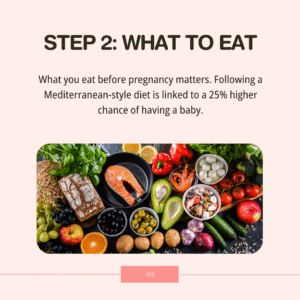
Once your labs are reviewed, the next step is to build a fertility-focused eating plan.
A recent systematic review looked at 13 studies with over 3,600 people going through fertility treatments. It found that what you eat before trying to get pregnant can make a difference. The Mediterranean diet was associated with a 25% higher likelihood of having a baby.
Here’s how to follow this eating style in your everyday meals:
- Load up on a variety of colourful vegetables and fresh fruit.
- Choose whole grains, such as quinoa, rolled oats, and brown rice.
- Include legumes such as lentils, chickpeas, and beans.
- Add healthy fats from extra-virgin olive oil, nuts, seeds, and avocados.
- Prioritise lean proteins, especially omega-3-rich fatty fish like salmon or sardines.
These foods don’t just nourish your body. They help lay the foundation for optimal egg development, hormone balance, and embryo implantation.
Step 3: What to Avoid During IVF Prep
Some everyday foods can quietly make it harder for your eggs to grow well or for the embryo to stick after transfer.
Try to avoid these:
- Ultra-processed foods: Increase oxidative stress and reduce cellular quality.
- Refined sugar: Spikes insulin and can disrupt hormonal signalling.
- Alcohol: Even small amounts negatively affect follicular development and IVF outcomes.
- Too much caffeine: Try to limit it to a low level (about one small coffee per day). Too much caffeine may increase the risk of early miscarriage.
Step 4: Lifestyle Habits That Support IVF
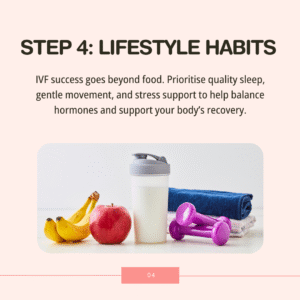
Preparing for IVF isn’t just about food. It’s also about how you live and recover each day.
- Sleep: Aim for 7–9 hours per night. Deep sleep helps restore hormonal balance and supports recovery from stress.
- Gentle movement: Walking, yoga, or stretching promotes blood flow and reduces inflammation. Avoid high-intensity training during the IVF cycle.
- Stress support: IVF can be emotionally intense. Use breathing techniques, journaling, or therapy to help keep cortisol levels in check.
These strategies are part of the 4-Step Egg Optimising System™ we taught inside the Mastering Egg Health™ Program. We focus on whole-body support to optimise egg health, not just diet or supplements alone.
